
Top-rated independent heating and cooling across North Texas and the Metroplex
Buzzing, Rattling, or Screeching From the Outdoor Unit
Your outdoor unit is making a noise it never used to make. Maybe a buzz you can hear through the bedroom window, a rattle like loose change in a can, or a screech that makes you wince. We repair noisy condensers on air conditioning systems across Texas, Oklahoma and Louisiana. Turn the system off at the thermostat, read on, then call us.
Call (888) 878-4879- Real people on the phone
- 7 days a week
- Quote in writing before any work
Taking calls until 5:00 PM CT
By the Trinity Air & Heat service team · reviewed by our working technicians
What the Noise Is Actually Telling You
The outdoor unit has three things that move: a fan motor, a compressor, and electrical contacts inside the disconnect and control panel. Everything you hear traces back to one of those. A steady electrical buzz usually points at a contactor or a capacitor that is struggling. A rattle is almost always something loose, either hardware or debris. A screech or metallic grind is a bearing or a fan blade touching sheet metal. Volume is not a good measure of how serious it is. A quiet grind can end a compressor, while a loud rattle is sometimes a screw. What matters is where it comes from and whether it changes when the unit starts up.
Cause Family One: Loose Hardware and Debris
This is the cheapest fix and the most common one we find, especially on units that have been through a hail storm or a windy spring. Top grilles work loose, screws back out, and the fan cage vibrates against the housing. Cottonwood seed, mulch, and small sticks get pulled into the fan and clatter around. Bent condenser fins from hail can hum at certain speeds. Panels that have been removed and reinstalled crooked will buzz all season. On a service call we pull the top, clean out the cage, straighten what can be straightened, and torque the hardware back down. Often the noise ends there.
Cause Family Two: Electrical Parts Under Strain
A hard buzz that comes and goes with the unit cycling usually means a contactor is chattering or a capacitor is weak. The contactor is a relay that closes to power the compressor and fan. When its contacts pit, it buzzes and sometimes fails to pull in, which leaves you with warm air. A weak capacitor makes motors work harder and hum. Both are common wear parts in this heat. We do not want you opening that panel. There is stored voltage inside a capacitor even after the breaker is off, and it can hurt you badly. This is a straight technician job.
Cause Family Three: Fan Motor and Compressor
A screech, squeal, or gravel-in-a-can grind from the outdoor unit points at bearings. Fan motor bearings dry out and start to howl, usually worst on startup, and the motor eventually seizes and takes the fan blade with it. Compressor noise is different. It sounds deeper, more internal, and often comes with the whole unit shaking on its pad. A compressor that has started slugging liquid or has failing internal mounts is telling you it is near the end. We check amp draw, listen with the panel off, and look at what the pressures say before we call it. Catching a fan motor early keeps it from becoming a compressor problem.
What You Can Safely Check, and What We Do Differently
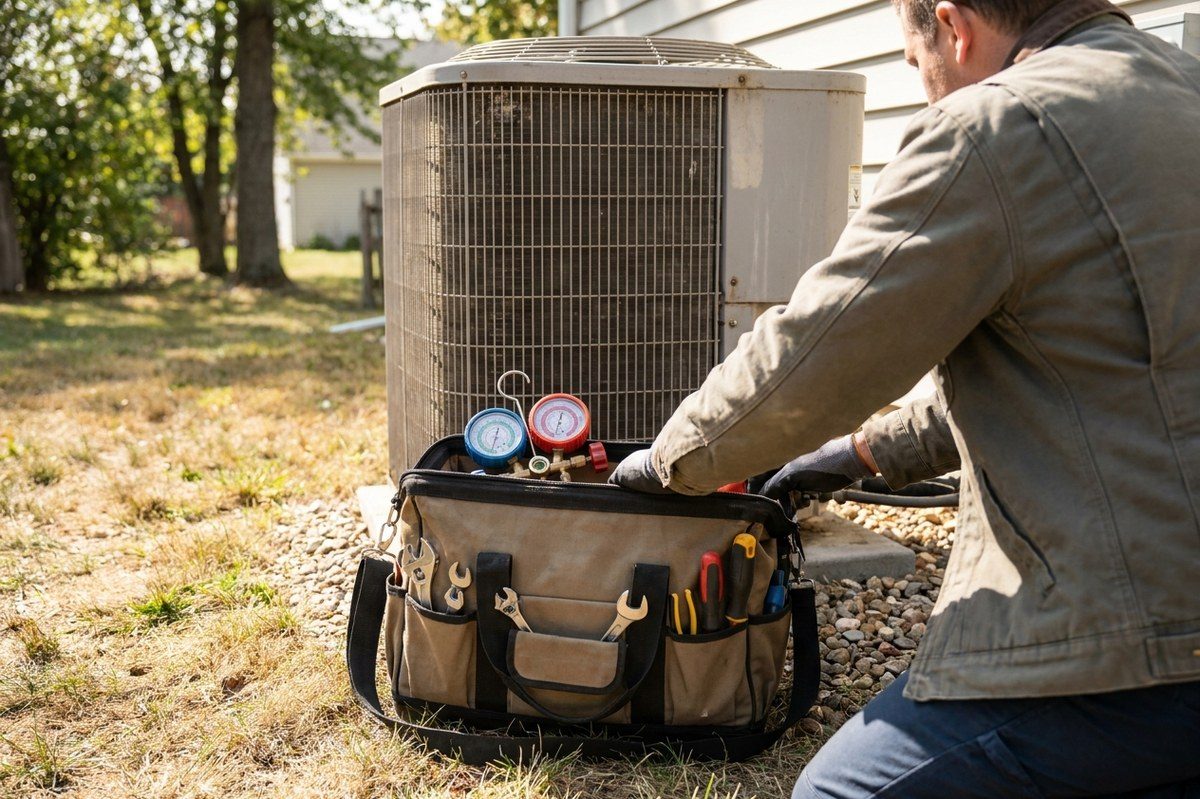
Safe for you: turn the system off at the thermostat so it stops running, look for a tripped breaker, change a filter that is clogged, and clear leaves, grass clippings and stacked items away from the outdoor unit so it has two feet of breathing room. Confirm supply vents inside are open. That is the list. Do not pull panels, touch wiring, or reach into the fan. What we bring is a meter and a set of gauges. We read amp draw against the motor rating, test capacitor microfarads, check contactor contacts, and read refrigerant pressures to see whether the compressor is loaded correctly. That tells us the difference between a loose screw and a failing motor.
When it is time to book
Buzzing, Rattling, or Screeching From the Outdoor Unit — common questions
Can I keep running my AC if it is just a rattle?
We would rather you did not. A rattle can be one loose screw, or it can be a fan blade about to contact the housing. Shut it off at the thermostat and let us look before something small becomes a motor replacement.
Why does my outdoor unit buzz for a second and then go quiet?
That usually means a contactor is trying to pull in and not quite making contact, or a capacitor is too weak to start the motor. It often gets worse in the heat of the afternoon. It needs a technician with a meter.
Is a loud outdoor unit dangerous?
Noise itself is not dangerous, but the causes can be. Electrical arcing, a seizing motor, and a straining compressor all create heat and fire risk over time. Turn the system off at the thermostat and schedule air conditioner repair.
How it works
- Step 1
Tell us the symptom
Call or fill in the quote form with what you hear, smell or feel. Warm air, short cycling, a breaker that keeps tripping. Details on your porch help us arrive with the right parts.
- Step 2
We diagnose on site
A technician checks the thermostat, airflow, the indoor coil and blower, then the outdoor unit and electrical side. You get a plain explanation of what failed and why it failed.
- Step 3
You approve the repair
We walk you through the fix and any parts involved before we start. Once you say go, we make the repair and confirm the system is holding temperature before we leave your driveway.
- A real person answers
- Open 7 days
- Written quote before work starts
Why homeowners call us
- Built for hard summersWe work on attic air handlers in July heat, undersized returns in older subdivisions, and condensers with hail-flattened fins. Those are everyday jobs across the region, so we know where these systems tend to give out first.
- Air conditioner repair and heating repairOne crew for both seasons. Air conditioning repair when the house won't cool, heater repair and furnace repair when the burners won't stay lit. Same technicians, same records, so nobody starts from scratch in November.
- We explain the failureYou hear which component failed and what it was doing to the rest of the system. If a repair is a short-term patch on an aging unit, we say so and let you decide the timing.
- Respect for the houseDrop cloths, shoe covers, and the attic hatch closed the way we found it. We keep the work area clean and we tell you honestly when a problem is airflow or ductwork rather than the equipment itself.
- All major brands, gas & electricOne independent crew for Carrier, Trane, Lennox, Goodman, Rheem and more.
- Straight answersIf a system is not worth repairing, we say so, often right on the phone.
About this guide
If the safe checks didn't fix it, the fault is real
Mention which checks you ran when you book; it speeds up the visit.
- A real person answers
- Open 7 days
- Written quotes
- All major brands
- Gas & electric
Rather not call? Get a free quote →